

Join our live, trauma-informed circles, where you can show up as you are
and receive the support you’ve been hoping to find.
Our groups for both Early Loss and Recent Loss meet on Tuesdays and Thursdays, all year long.
Weekly, live, online support groups
for daughters who’ve lost their mothers
Join a live, trauma-informed circle led by grief coach & NYT bestselling author Hope Edelman, where you can show up exactly as you are and be met by daughters who understand this loss from the inside.

You lost the person who was there from the beginning. The one who knew you better than anybody else.
And no matter how long it's been — a year or 25 — the sadness around losing your mother has persisted.
She was your first sense of home.
The keeper of your history. The one who witnessed every version of you in a way no one else quite can… or ever will.
And before long, it probably became clear: time doesn't do what people say it will.
You tried sharing your sadness with others. Your friends. Your partners. Maybe a therapist.
You lost the person who was there from the beginning. The one who knew you better than anybody else.
And no matter how long it's been — a year or 25 — the sadness around losing your mother has never really loosened its grip.
She was your first sense of home.
The keeper of your history. The one who witnessed every version of you in a way no one else quite can… or ever will.
And before long, it probably became clear: time doesn't do what people say it does.
You tried letting people in. Your friends. Your partners. Maybe a therapist.

But having someone listen to your grief and having someone understand it aren’t the same thing…and you could always tell the difference.
But having someone listen to your grief and having someone understand it aren’t the same thing…and you can tell the difference.
So at some point, it became easier to hide it than to explain it.
So at some point, it became easier to hide your grief than to try to explain it.

The World Gets It Wrong
The World Got This Wrong
While you were tending to your grief on your own, the culture had plenty to say about how you should be doing it…
"You should be over it by now."
"You should have let it go."
"Just give it time, and you’ll feel like yourself again."
And when that doesn't happen, it's easy to wonder if you're the problem.
You are not the problem.
You are not the problem.

Here’s What I Learned From Thousands of Daughters
Losing a mother is never something that resolves neatly with time.
Instead, it weaves its way into all of the decisions you make, the relationships you build, and the stories you tell yourself about who you are.
It shows up at your friend's baby shower when you remember your mom will never meet your children.
In the grocery store when you reach for the phone to ask her how she made that special dish.
On your birthday, at your wedding, at the dinner table… in every moment when she should have been there.
But it doesn’t have to remain something you navigate on your own.
When your grief is witnessed by others who understand, it transforms from a silence you sit with alone to a language you can finally share.
That is what fellow motherless daughters can give each other. And that is what you'll find here.
That is what fellow motherless daughters give each other. And it’s what you'll find here.
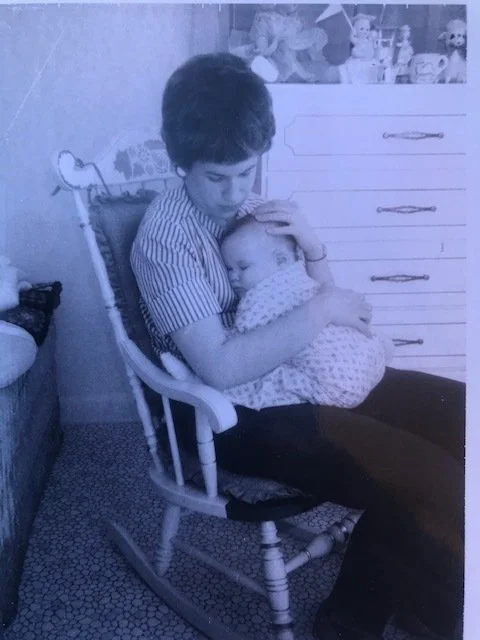

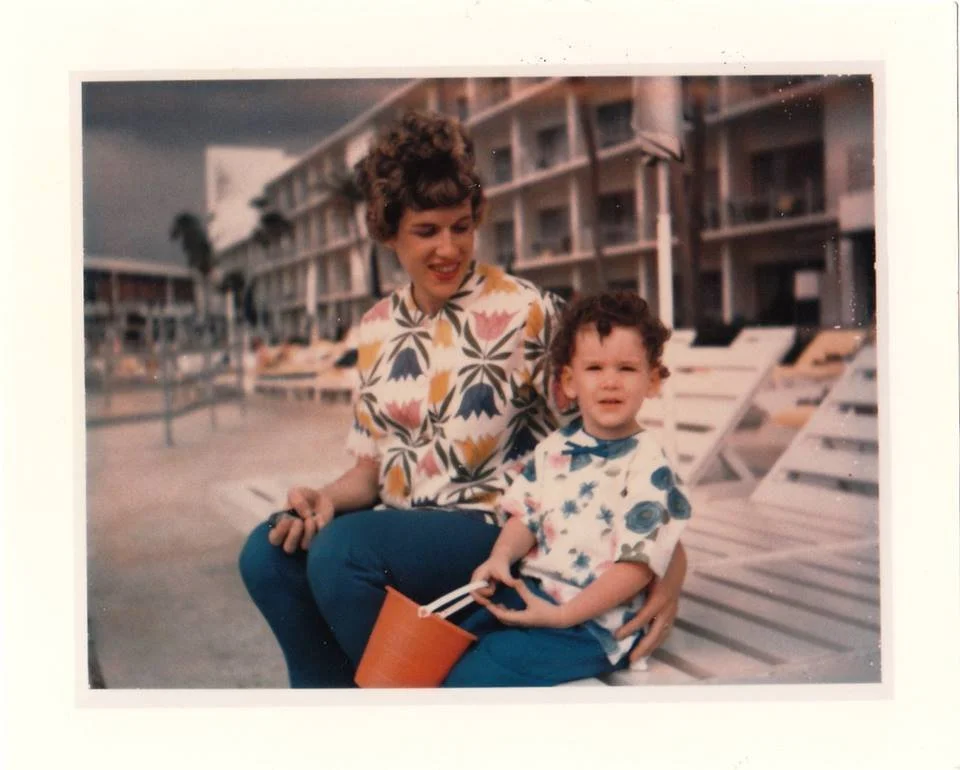
Hi! I’m Hope Edelman.
I lost my mother, Marcia, to breast cancer when I was 17 years old.
What followed wasn’t grief in the way people tend to describe it. It was survival disguised as living.
Years of anxiety attacks and hyper vigilance
Poor relationship choices
Fierce independence and overachieving — just to prove I was "okay"
The only times I felt some comfort were when I found myself in conversation with other women who had lost their mothers.
Not a therapist. Not a friend who meant well. Another motherless daughter.
Someone who didn't need me to explain why I wore my mom’s gold ring every day or why a song could make me start sobbing inside a grocery store.
So I kept seeking that out — and eventually wrote about what I was witnessing and living through. Motherless Daughters went on to become a NYT bestseller.
Hi, I’m Hope Edelman.
I lost my mother, Marcia, to breast cancer when I was 17 years old.
And what followed wasn’t just grief in the way people tend to describe it. It was survival disguised as living.
Years of anxiety attacks and hypervigilance
Poor relationship choices
Fierce independence and overachieving — just to prove I was "okay"
The only times I felt some comfort were when I found myself in conversation with other women who had lost their mothers.
Not a therapist. Not a friend who meant well. Another motherless daughter.
Someone who didn't need me to explain why I wore my mom’s gold ring every day or why a song could get me sobbing inside a grocery store.
So I kept seeking that out — and eventually wrote about what I was witnessing and living through. Motherless Daughters went on to become a NYT bestseller.
What 600 Readers Taught Me
When the book first came out, I received more than 600 letters from women all over the country. When I spread them out across my living room floor to read them, I realized they all said a version of the same thing:
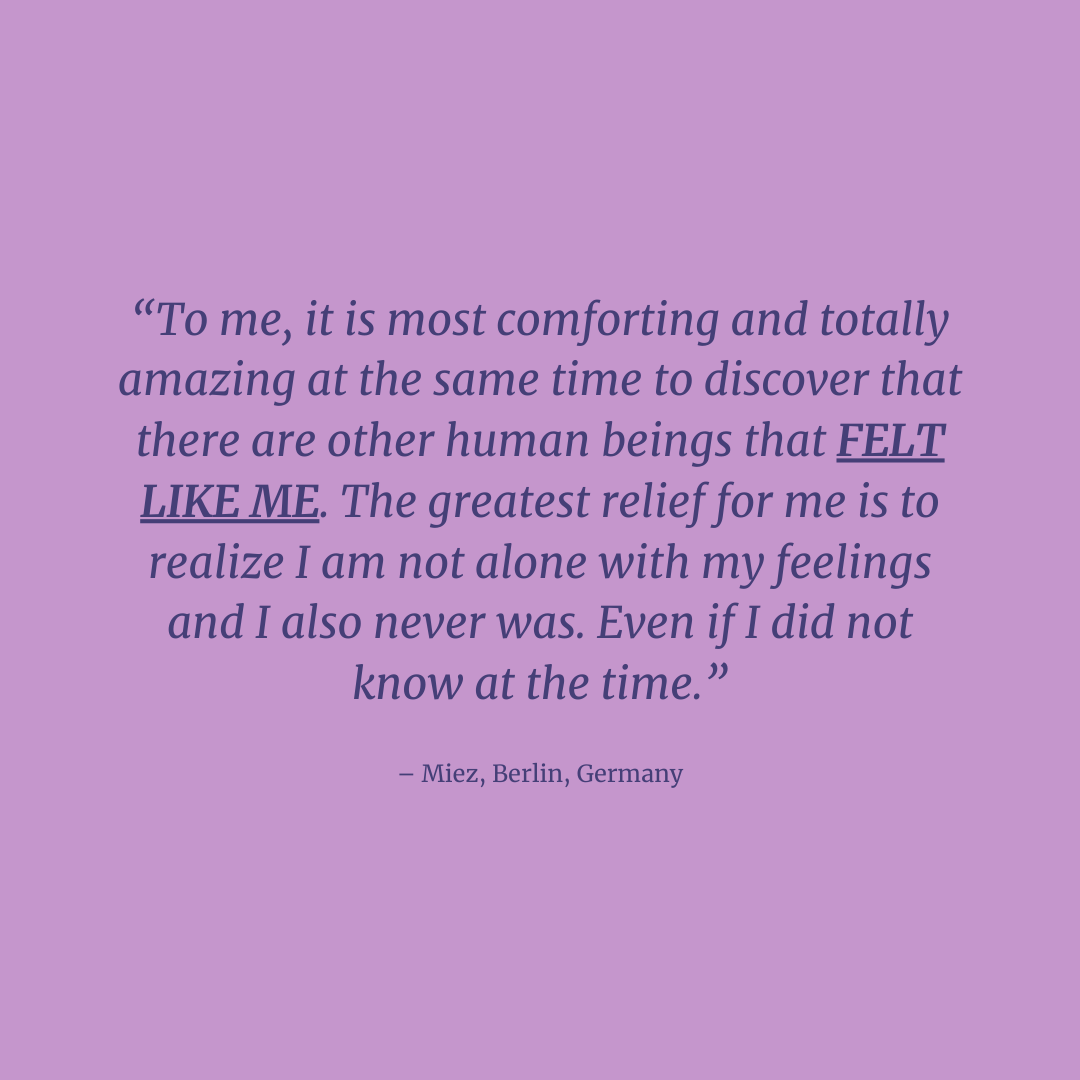
“I thought I was the only one.”
That line broke me open, because I'd felt that way, too. And it told me something I couldn't ignore.
That grief wasn’t the problem. The isolation was.
Since then, I've spent decades sitting with motherless daughters in groups, workshops, and honest conversations. I've watched women's lives shift and their self-acceptance change when they give themselves permission to revisit, re-examine, and revise their stories in a community of daughters who share their lived experiences.
That's why I created Motherless Daughters Circles. And that's what I want to share with you now.

WELCOME TO MOTHERLESS DAUGHTERS CIRCLES
WELCOME TO MOTHERLESS DAUGHTERS CIRCLES
Safe, nurturing spaces where you can bring your grief as it is — and be met, witnessed, and held by other motherless daughters who’ve lived through this loss too.
Inside a Circle, grief isn’t something you need to “get over.” It’s something you begin to understand differently.
These online communities are safe, nurturing spaces where you and your grief can show up exactly as you are — and be met, witnessed, and held by other motherless daughters who’ve lived through this loss, too.
Inside a Circle, grief isn’t something you need to “get over.” It’s something you start to carry differently.
You’ll have room to talk about what’s coming up for you, week after week.
You’ll hear other women share their stories, and in those moments, parts of your own story start to make sense and the heaviness of going through it alone begins to ease.
Over time, this consistent, judgment-free support helps you remember who you are outside of this loss.
You’ll have room to talk about what’s coming up for you, week after week.
You’ll hear other women share their stories. In those moments, parts of your own story will start to make sense, and the weight of going through it alone begins to ease.
Over time, this type of consistent, judgment-free support helps you remember who you were before this loss, and who you can be after.
You can speak, or you can just listen. You may have a lot to say,
or not know where to begin. Take the time you need.
Nothing about your grief has to be edited, explained, or justified here.
You’ve already spent enough time doing that.
This is a place to be seen, heard, and witnessed, just as you are.
You’re welcome to come as you are…whether that’s feeling
reflective one day, overwhelmed another, or somewhere in between.
You’re welcome to come as you are…whether that’s feeling reflective one day, overwhelmed another,or somewhere in between.
You’re welcome to come as you are…whether that’s feeling reflective one day, overwhelmed another,or somewhere in between.
You can speak, or you can just listen. You may have a lot to say, or not know where to begin.
Nothing about your grief has to be edited, explained, or justified here.
You’ve already spent enough of your life doing that.
You can speak, or you can just listen. You may have a lot to say, or not know where to begin.
Nothing about your grief has to be edited, explained, or justified here.
You’ve already spent enough of your life doing that.
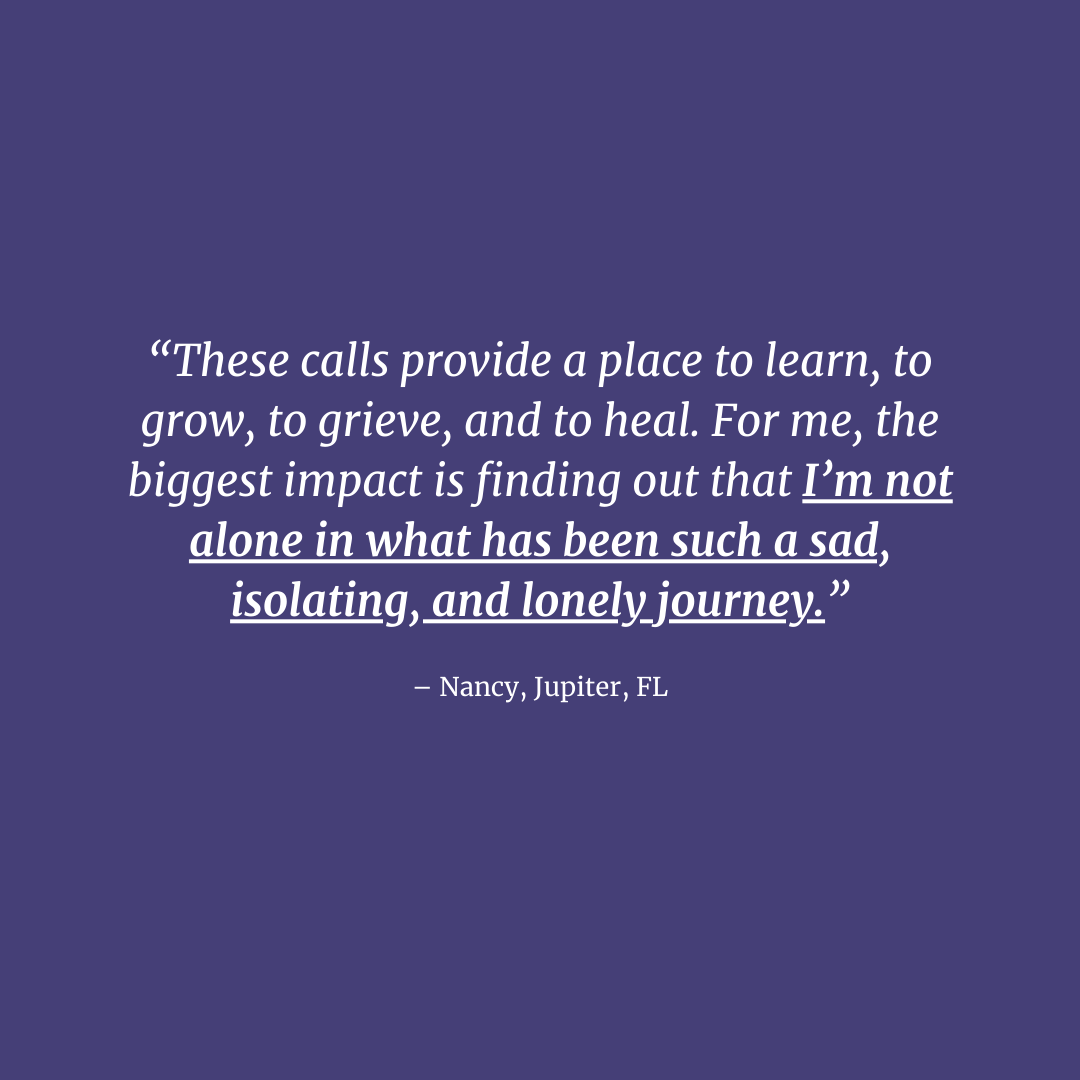
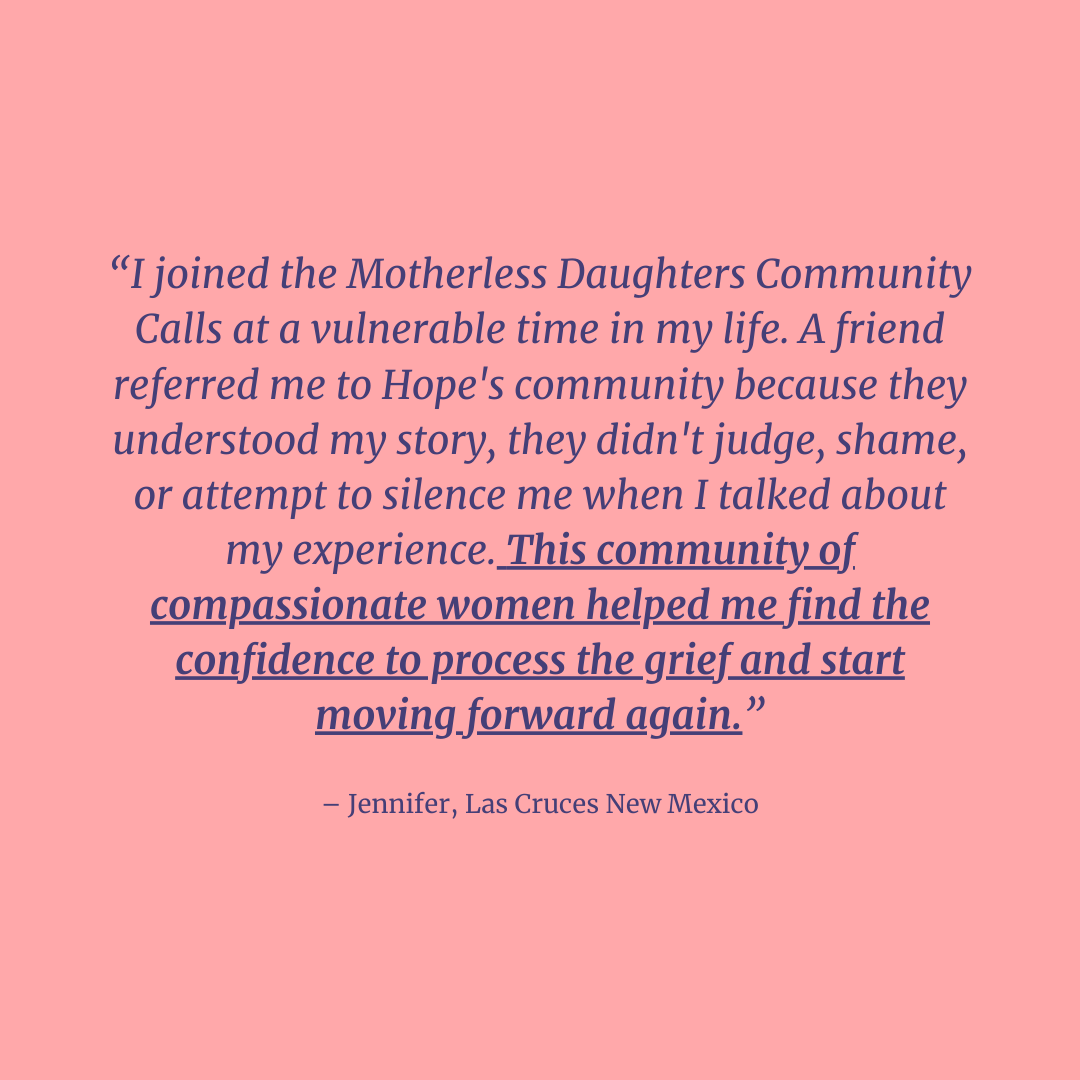
For daughters who’d like support while navigating the tender and complex journey of the first 2 years after a mother’s death.
For daughters who understand the lasting impact of losing a mother during childhood, adolescence, or early adulthood.
NOT SURE WHERE YOU BELONG? Email us at info@hopeedelman.com
and we'll help you find your place.
I lost my mom recently.
FIND YOUR MOTHERLESS DAUGHTERS CIRCLE

We've created 2 dedicated spaces for daughters who’ve lost their moms to death.
One is for those who lost moms recently, and one for those who lost moms when they were young.
Because the bereavement needs of each group are different, you deserve a group that can meet yours.
Find the circle that’s best for you.
I lost my mom when I
was young.
”I lost my mom when I was young.”
Devoted to women and non-binary individuals navigating the lasting impact of losing a mother during childhood, adolescence, or early adulthood.
“I lost my mom recently.”
Devoted to women and non-binary individuals navigating the tender and complex journey of the first 2 years after losing their mothers.